




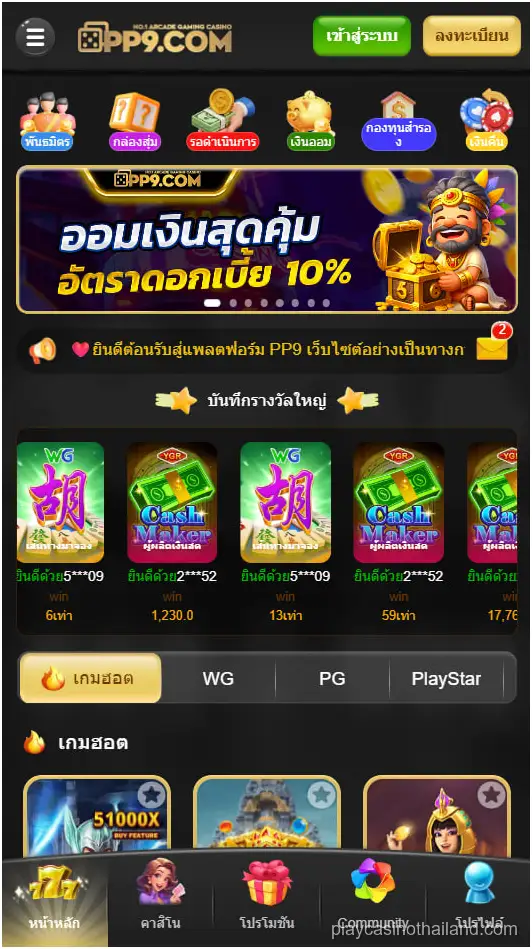
Signal Group 1: Entry Initiation
Within PP9 thailand, platform interaction can be examined through a signal–response framework. Each user action generates a signal, and the platform’s structural integrity is measured by how accurately and consistently it responds. The first signal group concerns entry initiation, which includes PP9 app search behavior, PP9 download intent, PP9 apk installation decisions, and PP9 login attempts. Entry responsiveness determines whether early-stage engagement progresses toward registration or terminates prematurely.
Thailand’s mobile ecosystem introduces unique variables into this signal–response loop. Network stability varies between urban and regional areas, and device specifications range widely. As a result, PP9 mobile infrastructure must support adaptive rendering, session durability, and encrypted authentication across fluctuating bandwidth conditions. Entry architecture must not only allow access, but sustain it under load.
When analyzing entry initiation risk and response alignment, several measurable variables emerge:
- Domain authenticity verification before installation
- Secure HTTPS encryption during first login
- Stability of dashboard rendering after authentication
- Persistence of session tokens across repeated log-ins
Evaluating these variables early reduces technical friction in later lifecycle stages.
To illustrate how entry signals align with platform responses structurally, the following system interaction table maps user intent to backend stabilization mechanisms.
|
User Signal |
Platform Processing Layer |
Security Control Applied |
Session Outcome |
|
App Search |
Distribution Routing Node |
Domain Validation |
Redirect to official source |
|
APK Request |
File Integrity Module |
Hash Verification Prompt |
Controlled Installation |
|
Login Attempt |
Authentication Engine |
Encrypted Credential Check |
Token Issued |
|
Repeated Login |
Session Memory Manager |
Device Recognition |
Persistent Access |
This table clarifies that every entry-stage signal must trigger a stabilization response in order to preserve structural continuity.
User Signal: App Search and Download Intent
Searching for PP9 app download or PP9 thailand access represents the earliest interaction signal. At this point, users typically evaluate clarity of instructions, compatibility with their device, and visible trust indicators such as secure domains and version transparency. Unclear distribution pathways weaken entry confidence.
Platform Response: Multi-Channel Distribution Access
PP9 typically responds by offering browser-based entry, direct mobile app installation, and standalone Android package distribution. Multi-channel access increases compatibility across operating systems and device configurations. Clear labeling of installation steps ensures reduced ambiguity.
User Signal: APK Installation Request
Choosing PP9 apk indicates preference for deeper device integration. This action requires enabling unknown-source permissions within Android settings, increasing user oversight responsibility.
Platform Response: Installation Integrity and Security Validation
In response, the platform must provide visible version identification, integrity prompts, and secure login redirection. Clear update pathways ensure that older versions do not compromise performance.
Signal Group 2: Account Creation Trigger
Once entry stabilization succeeds, the next signal group revolves around PP9 registration online. Account creation represents a behavioral shift from exploration to participation. Identity structuring must respond to registration signals efficiently to avoid onboarding abandonment.
User Signal: Registration Submission
Submitting PP9 register information signals willingness to share personal data. Typically required inputs include username credentials, email verification, and password configuration. Accurate submission ensures alignment with later withdrawal verification.
Before confirming registration, users should review:
- Password complexity and strength indicators
- Email verification confirmation status
- Accuracy of personal information fields
- Alignment between account name and intended banking details
Careful preparation at this stage prevents later compliance delays.
Platform Response: Data Processing and Credential Issuance
The system processes submitted information through validation engines that prevent duplication and incorrect formatting. Credential issuance follows secure hashing and encryption standards. Efficient backend processing strengthens onboarding continuity.
User Signal: Login Attempt
Following registration, PP9 login serves as a validation test of authentication consistency. This signal measures the strength of credential issuance mechanisms.
Platform Response: Authentication Confirmation and Session Activation
The platform verifies credentials, generates encrypted session tokens, and activates the user dashboard. Stable authentication confirmation reinforces identity-layer integrity.
Signal Group 3: Gameplay Engagement
Gameplay signals represent the transition from identity structuring to monetized interaction. PP9 thailand integrates PP9 slots, sportsbook markets, and PP9 live casino sessions under unified navigation.
User Signal: Slot Selection
Selecting a PP9 slot indicates intent to initiate automated wagering. Users expect rapid game rendering and accurate balance reconciliation. Volatility awareness is important in managing gameplay variance.
When assessing slot engagement, users should consider:
- Volatility classification of selected game
- Stake size relative to bankroll
- Frequency of bonus feature triggers
- Session time management
These considerations reduce financial fluctuation exposure.
Platform Response: Engine Allocation and Game Rendering
Upon slot selection, backend engines allocate resources, render graphical assets, and synchronize wagering confirmation with result generation. Immediate balance updates reinforce transactional transparency.
User Signal: Live Casino Entry
Entering PP9 live signals preference for real-time interaction.
Platform Response: Stream Initialization and Dealer Sync
Adaptive bitrate streaming activates video feeds while synchronizing dealer actions with wager confirmation overlays. Stability during bandwidth fluctuation is essential for preserving trust.
Signal Group 4: Incentive Activation
Incentive activation represents a high-intensity signal within the PP9 thailand architecture because it directly influences both wagering volume and liquidity timing. While bonuses expand playable capital, they also introduce structured rollover commitments that alter withdrawal eligibility conditions. The platform’s ability to respond clearly and consistently to incentive-related signals determines whether engagement remains sustainable or becomes friction-heavy.
User Signal: Welcome Bonus Claim
Activating the PP9 welcome bonus signals intent to expand playable capital and accelerate engagement. However, bonus activation should always be preceded by structural evaluation rather than impulse. Understanding rollover structure ensures that capital remains aligned with realistic wagering capacity.
Key evaluation factors include:
- Total rollover multiple applied
- Maximum eligible bonus cap
- Contribution percentage across product types
- Expiration deadlines
These elements determine how long bonus-linked funds remain restricted and how much wagering volume must be completed before withdrawal eligibility activates.
Platform Response: Bonus Allocation and Wager Tracking
In response to the welcome claim signal, the system credits segmented promotional funds into the wallet and activates automated wager tracking. The separation between deposit balance and bonus balance reduces confusion. Transparent progress bars or rollover percentage trackers strengthen clarity during extended wagering cycles.
The platform’s ability to update rollover progress in real time reduces ambiguity. Without accurate tracking visibility, users may miscalculate remaining wagering obligations, resulting in delayed withdrawal attempts.
User Signal: Promo Code Input
Entering PP9 promo code today represents a time-sensitive incentive signal. This action often corresponds to limited campaign windows or recurring bonus day promotions.
Platform Response: Code Validation and Campaign Linkage
The system validates the entered code, confirms eligibility, and links the user account to the relevant campaign structure. Clear validation messages prevent stacking misunderstandings or expired code confusion. If eligibility conditions are not met, transparent rejection feedback strengthens governance consistency.
User Signal: First Deposit Execution
Executing a qualifying deposit to activate a PP9 first deposit bonus signals capital commitment combined with incentive participation.
Platform Response: Multiplier Credit Application
The platform applies proportional multiplier credit and initiates rollover governance parameters. At this stage, system monitoring must track wagering contribution by product type, enforce minimum odds thresholds where applicable, and monitor stake limitations.
Beyond structural enforcement, users should evaluate behavioral pacing to prevent extended rollover dependency. A structured approach to incentive usage may include:
- Activating only one promotion at a time
- Monitoring rollover progress daily
- Avoiding significant stake increases solely to accelerate rollover
- Planning withdrawal timing after full completion
Such discipline maintains balance between engagement amplification and liquidity flexibility.
Signal Group 5: Capital Movement
Capital movement represents the final signal–response layer within PP9 thailand. While incentives amplify wagering volume, withdrawal governance ultimately determines trust sustainability. Efficient capital circulation depends on how clearly the system responds to deposit and withdrawal signals under varying transaction loads.
User Signal: Deposit Submission
Submitting a deposit indicates liquidity injection into the ecosystem. Thai users commonly utilize domestic bank transfers, QR-based payment channels, and selected e-wallet integrations. Deposit processing speed significantly influences engagement continuity, especially during live sporting events.
Platform Response: Channel Routing and Balance Update
Upon deposit submission, funds are routed through selected payment rails and reflected in the wallet once confirmation is received. Rapid balance update strengthens signal alignment and encourages seamless progression into gameplay or bonus activation.
However, financial governance does not conclude at deposit confirmation. The withdrawal signal introduces additional layers of verification and processing discipline.
User Signal: Withdrawal Request
A withdrawal request signals that wagering objectives have been completed and liquidity exit is desired. This signal is often influenced by bonus rollover completion status and identity verification alignment.
Platform Response: Queue Placement and Compliance Review
Withdrawal requests enter structured authorization queues that prioritize processing based on verification completeness, transaction size, and risk assessment variables. Identity alignment, payment method consistency, and bonus rollover completion are verified before release.
Withdrawal processing variables include:
- Verification completion status
- Active bonus obligations
- Transaction size
- Selected withdrawal channel
Clear queue indicators and status updates reduce uncertainty during review windows.
Financial signal management must balance two objectives: maintaining fraud prevention safeguards and ensuring timely capital release. When compliance verification, rollover completion, and payment routing synchronize effectively, the signal–response cycle concludes smoothly.
Market Signal Adaptation Within Thailand
Within Thailand’s offshore gambling environment, PP9 thailand must continuously adapt to macro-level market signals. These include increased mobile usage, demand for QR-based payment integration, and heightened awareness regarding bonus transparency. Platforms that respond consistently to these broader signals strengthen long-term credibility.
Long-Term System Responsiveness and Stability Outlook
Long-term stability within the PP9 signal–response architecture depends on synchronized responsiveness across all five groups: entry, identity, gameplay, incentive governance, and capital movement. A breakdown in any single layer may propagate friction throughout the lifecycle.
Thailand’s gambling regulation remains restrictive, and PP9 operates under cross-border licensing frameworks. This analysis does not constitute legal advice. Sustainable engagement ultimately depends on disciplined bankroll management, informed bonus activation decisions, and realistic expectations regarding wagering cycles and withdrawal timing.